Liquid cooling: compare the server interface and facility loop
Liquid cooling must be chosen with the compute equipment, not added as an isolated facilities purchase. MMC UAE supplies ATTOM liquid cooling options for projects across the UAE, Saudi Arabia and Qatar. Start with the server manufacturer’s supported cooling method, then trace the complete heat path from component to final rejection.
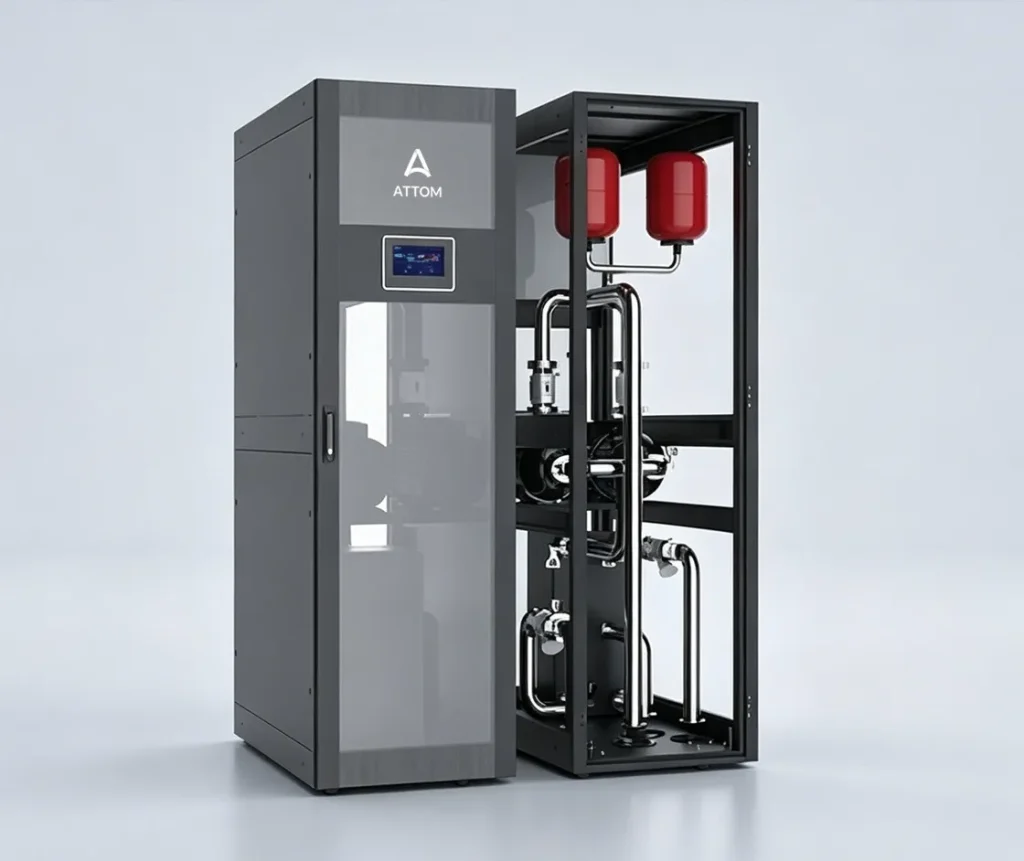
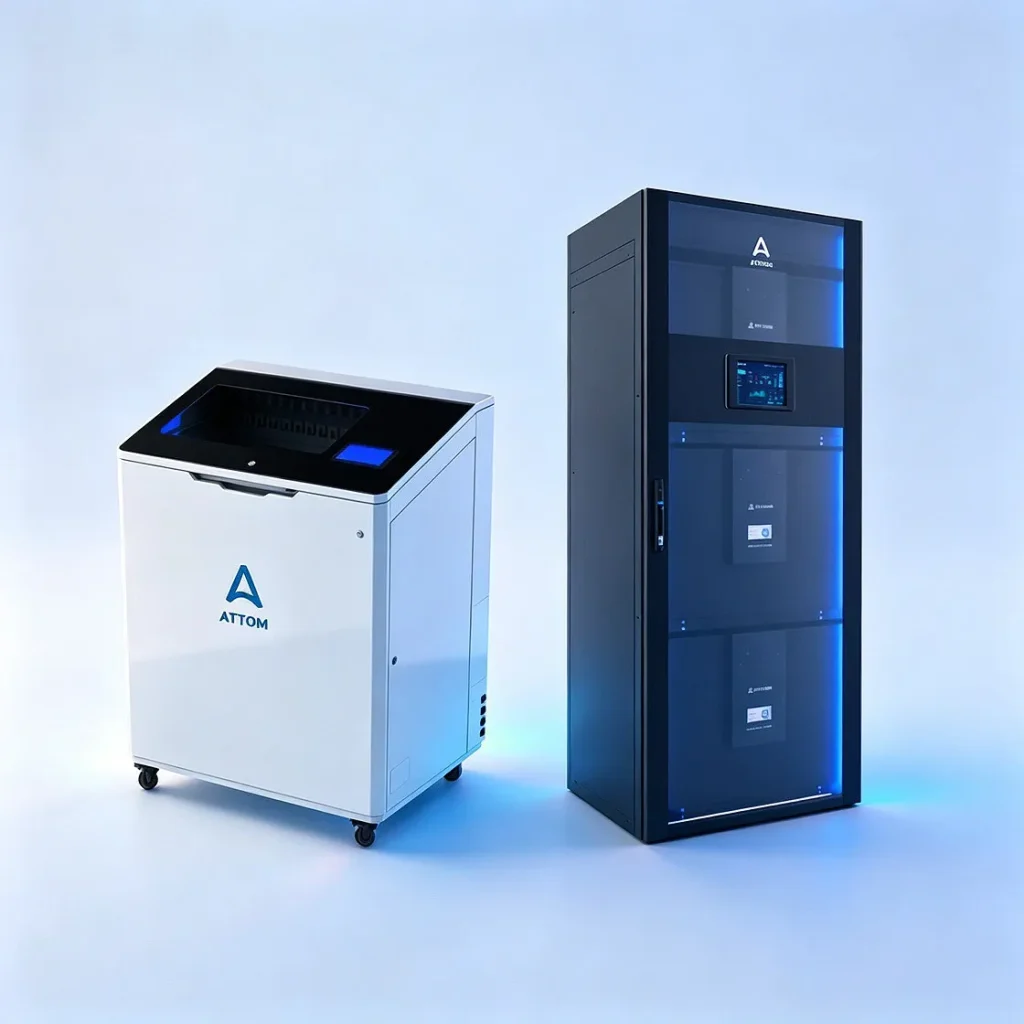
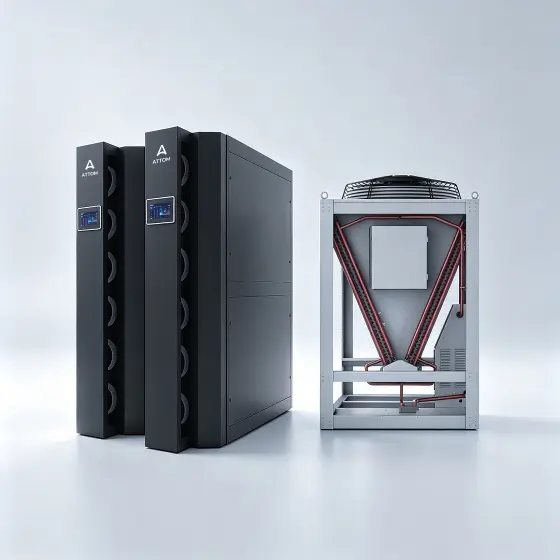
Direct-to-chip systems transfer heat through supported server interfaces and a coolant distribution arrangement. A rear-door heat exchanger addresses heat at the rack exhaust and introduces different rack and water-loop requirements. Immersion places suitable equipment in a compatible fluid environment and changes handling and maintenance procedures. These approaches cannot be compared only by headline cooling capacity.
Record rack heat load, equipment compatibility, allowable conditions, fluid or water quality and available facility infrastructure. A design may still need air cooling for components not served by liquid. Confirm the residual room heat and the response if either the liquid or air system becomes unavailable. Ownership of pumps, CDU, pipework, isolation and leak detection should be explicit.
The table outlines the main selection questions. Individual product pages provide published equipment information, while a project proposal should identify the exact configuration and connection boundary. Avoid using a generic server wattage threshold to decide when liquid cooling is required. The supported hardware and rack arrangement provide the relevant starting point.
For UAE retrofits, assess plant space, pipe routes and the approved summer design conditions. The building may have enough electrical power while lacking a usable heat rejection path. In a new modular facility, reserve connections and access for staged capacity. For regional deliveries, clarify who undertakes the facility loop and commissioning at the destination.
Commissioning should validate operating conditions, alarms, isolation and service access under an agreed test procedure. Handover needs connection diagrams, selected fluid specifications, maintenance instructions and response procedures. Efficiency depends on the whole facility and test conditions; a cooling component should not be assigned a guaranteed facility PUE without an appropriate measured basis.
| Option | Best considered for | Check before selection |
|---|---|---|
| Direct-to-chip | Servers designed for supported liquid interfaces | CDU, water loop, server compatibility and residual air heat |
| Rear-door heat exchanger | Heat removal at the rack exhaust | Rack fit, water conditions, pressure and service access |
| Immersion | Hardware and operations suitable for fluid immersion | Fluid compatibility, equipment preparation and component handling |